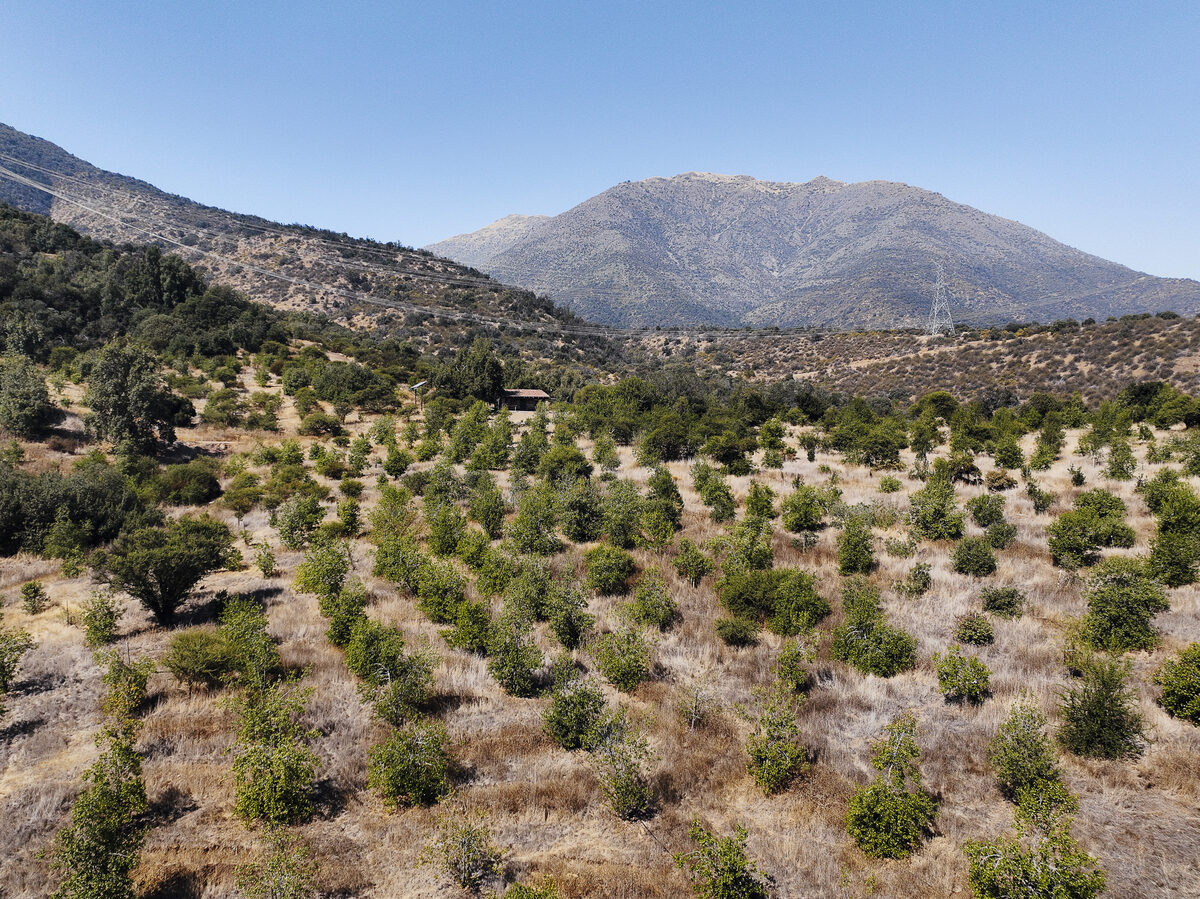
Seven operational programs, five management zones and a common goal: to sustain and restore El Ajial's relict Mediterranean ecosystems for future generations.
El Ajial National Reserve, as a Private Protected Area within the SNAP, sustains and restores its relict Mediterranean ecosystems, ensures the long-term viability of its species under conservation status, safeguards essential hydrological processes and the cultural heritage of Pucará El Peral, all through active, sustainable and participatory management that generates benefits for local communities and future generations.Management Plan 2026–2036
The reserve is organized into management zones according to specific objectives: strict preservation, ecological restoration, primitive use, extensive use, and cultural use.
Removal of browsing and soil compaction in affected zones; reforestation with native species (quillay, peumo, luma) across 320 hectares by 2032. Perimeter fencing, agreements with neighboring ranchers, and integrated work with the Local Genetics Rescue Nursery.
Quarterly water-quality sampling (pH, oxygen, sediments), non-invasive population density monitoring, and riparian vegetation restoration. Goal: maintain population viability ≥ 90% by 2036.
80% reduction of blackberry and other invasive cover in the hygrophilous forest by 2036. Manual and mechanical removal plus planting of competing native species.
5 km of priority firebreaks, IoT dataloggers for early warning, annual drills with Paine Fire Department and CONAF, immediate-response protocol. Operational goal: 0 hectares affected per year.
Camera-trap and GPS-collar monitoring, control of feral animals, strengthening of the biological corridor towards Altos de Cantillana. Leopardus colocolo is the umbrella species for this program.
Workshops at schools in Huelquén and Chada, programs with schools across the Metropolitan Region, reforestation volunteer days. Goal: 1,000 students per year by 2030.
Cross-cutting program for continuous scientific information generation, with biennial reporting to the SBAP. Academic and national research center partnerships.
Seven years ago we launched a nursery producing around 5,000 trees per year, from 27 different species — all with material collected from within the reserve.
Recently upgraded with off-grid solar and educational infrastructure, the nursery is the operational heart of our restoration program.
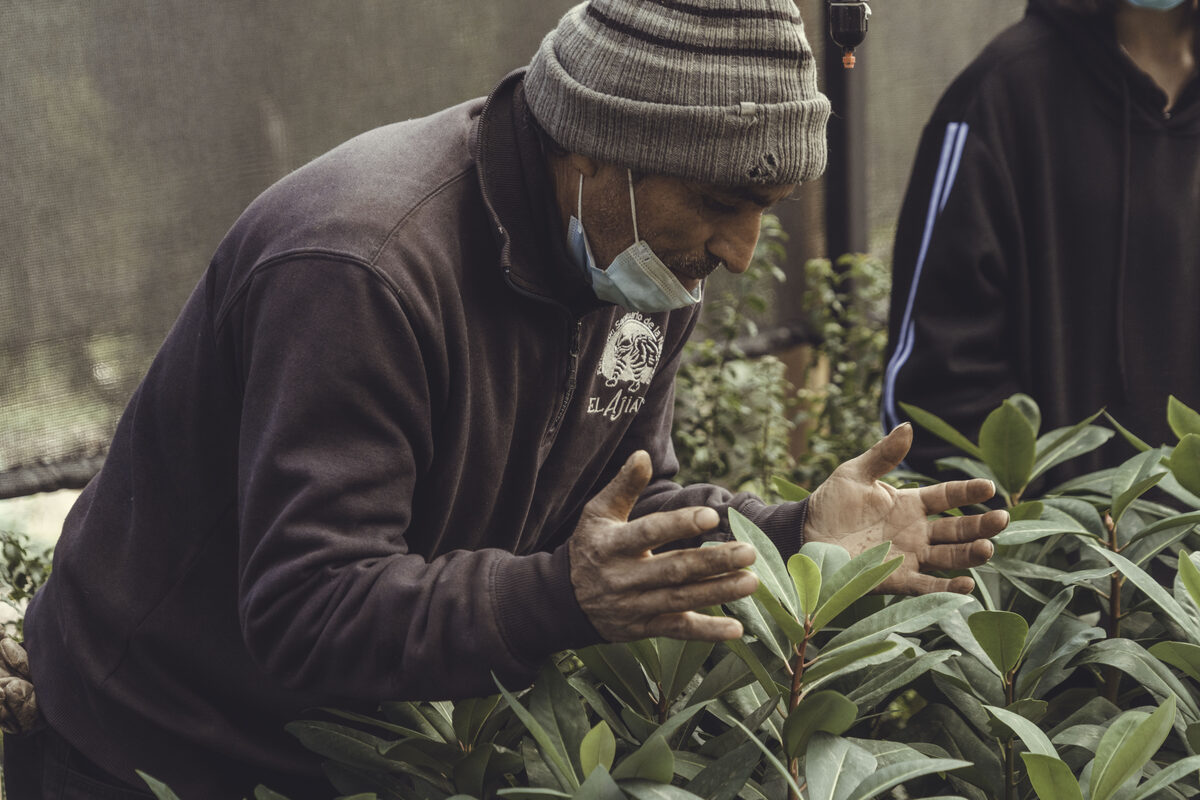
21 native and endemic species from central Chile, propagated with material collected within the reserve. Available stock and reference prices.
| Species | Common name | Habit | Origin | Cat. | Stock | Ref. price |
|---|---|---|---|---|---|---|
| Loading inventory… | ||||||
Plants from El Ajial Nursery are available by institutional order, for restoration projects or landscaping with native species. Write us through the form and a team member will coordinate availability, shipping and payment.
Prices are per unit reference and may vary depending on plant size and requested quantity. Stock is updated periodically.
7 intervention sectors, more than 13,800 trees planted with local genetics, and 60 hectares undergoing active ecological restoration.
The plantings are composed mainly of native species of the local sclerophyll and hygrophilous forest — quillay, peumo, litre, lingue, maitén, huingán, molle, boldo, patagua and canelo —, all produced on site at the Local Genetics Rescue Nursery from seed and material collected within the reserve itself.
Click on each sector to see name, surface area, trees planted and planting year.